
My Wish For Better Care For Americans Living in Rural Areas
A letter to Medicaid Directors, State Leaders, and other invested collaborators who were awarded Rural Health Transformation (RHT) Grant funding.
A letter to Medicaid Directors, State Leaders, and other invested collaborators who were awarded Rural Health Transformation (RHT) Grant funding.

An Elevance Health Public Policy Institute study found rural patients used telehealth less than non-rural patients across all chronic conditions and insurance types.


We have the opportunity to design systems that give people greater capacity for the work where human presence matters most: listening, understanding, reassuring, deciding, and caring.

It usually tracks some version of value delivered, where more customers lead to more usage and more revenue. However, in healthcare, the blind pursuit of revenue can cause real harm.

Providing access to GLP-1s only solves part of the problem. In fact, without a broader approach, it may lead to new challenges alongside the ones it aims to address.

The specialty access and capacity crisis demands more than incremental fixes. It requires expanding virtual access and fundamentally rethinking how specialty care can be delivered.

Now is the time to build a system where every pregnant person, regardless of zip code, ethnicity, or insurance status, can access the level of care their pregnancy demands.


Discover the top AI-powered EAP providers for 2026. Compare platforms like Kyan Health and Spring Health on triage speed, global reach, and clinical quality to transform workforce wellbeing.

Teladoc Health is expanding its 24/7 urgent care service to treat more conditions while improving care coordination, prevention and medication affordability.

The American Medical Association is urging Congress to permanently extend Medicare’s pandemic-era telehealth flexibilities, warning that temporary extensions create uncertainty for patients and providers.

These two promising changes in national healthcare policy could transform access to care for millions of Americans.

Time is of the essence, particularly for those with cognitive conditions. The loss of telehealth flexibilities, combined with disruptions to Medicaid, could have devastating consequences for millions of patients with dementia and other cognitive and behavioral conditions.


Healthcare payments are no longer about transactions. It’s about controlling the revenue cycle. And increasingly, that control is not sitting with ISOs.

For payers, that means the work ahead is not simply contracting with virtual providers — it’s rebuilding the infrastructure that builds trust as members find the right care for them. Here are three elements that need rethinking.
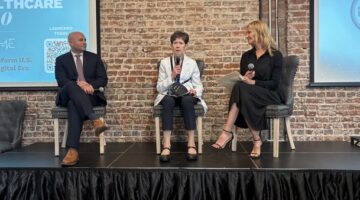
Leaders from the VA and the ONC discussed how the future of U.S. healthcare will rely on both technology and creative problem-solving during a panel at DiMe’s Healthcare 2030 Summit.

A group of healthcare organizations sent a letter to Congressional leaders urging them to permanently extend Medicare telehealth flexibilities introduced during the Covid-19 pandemic.
The Alliance for Connected Care, the American Telemedicine Association and numerous other organizations sent a letter to the DEA urging action to safeguard remote prescribing of controlled substances.

The One Big Beautiful Bill Act has drawn criticism from healthcare groups for slashing Medicaid and ACA subsidies, but it contains a few provisions that could drive progress.